DeepMamaAI-driven Discovery

DMM-AI Discovery Framework

From answer generation to discovery systems. It reads AI discovery systems through three dimensions: how knowledge is generated, how it is verified, and how search is scaled — at the right strategy for the task. Trust depends on the structure of verification.

“The whole of science is nothing more than a refinement of everyday thinking.”
— Albert Einstein, “Physics and Reality”
The trust-aware research loop
Initial Question A problem worth exploring Knowledge Inputs priors · external sources Research ITERATIVE LOOP 1 Knowledge Seeding priors · retrieval · verified memory 2 Hypothesis Generation candidates · plans · ideas Reasoning / Searching 3 Evaluation test · simulate · score Verifiers 4 Selection & Update select · refine · store Memory Final Discovery A result worth keeping
Knowledge type

🧠 Intrinsic priors

Fast and always available, but non-traceable and vulnerable to hallucination.


AI: knowledge acquired during pretraining · Human: intrinsic expertise of the researcher

instantcheapuncertain trust
Knowledge type

📚 External sources

Papers, datasets, published results, and live data feeds provide external grounding, but require source judgment. AI: retrieved documents, databases, and real-time APIs · Human: scientific literature, reviews, and field data

retrievaltraceabletrust varies
Knowledge type

🧪 Verified experience

Past experiments, tests, and validated outcomes are strongest, but expensive to obtain. AI: execution feedback and validated outcomes · Human: personal experiments and verified prior results

costlyrarehigh trust
Domain effect

Where guidance comes from

Familiar domains rely more on priors, studied domains on retrieval, adjacent domains on analogy, and unknown domains on exploration.

priorsretrievalanalogyexploration

Key idea: research does not start from zero — it starts from knowledge of uneven reliability, then turns that knowledge into hypotheses, tests, and verified carryover.

Two frontiers of research
DeeRSDeep Reasoning Search
→
WEShWide Explorative Search

DeeRS reasons in depth on few candidates with rich, multi-faceted feedback. WESh explores broadly through trial-and-error on many candidates with simple score feedback. Strong systems compose both.

Control spectrum — where is the human?
At every step conversational use Buy · AI services Claude, GPT, Gemini Team · domain expert At the gates workflow with checkpoints Build · agentic workflow on existing tools Team · 1–2 ML engineers At the outer loop sets goals, reviews results Build · custom search loop often on a cluster Team · dedicated HPC / ML Absent no human in the loop Buy turnkey — or Build a closed system Team · none, or research org

Key insight: where verification is strong, control can shift toward automation; where it is weak or delayed, humans stay in the loop.
Read as an investment, the further right you go the more you build rather than buy — until full autonomy, which you can either purchase off the shelf (little control, little differentiation) or engineer end to end (the heaviest commitment of all).

Memory layers
1
All-in-contextone window, no persistence
→
2
Iterativewithin a session: state, population, archive
→
3
Persistentacross sessions: episodic, semantic, procedural

Key insight: memory complexity scales with the discovery horizon. The right layer is the lowest one that fits the task — over-engineering wastes effort, under-engineering caps what the system can discover.

Five levels of verifier
V1Logic
→
V2Constraints
→
V3Evaluation
→
V4Experimentation
→
V5Societal Acceptance

Every discovery system depends on how it filters ideas — from formal consistency to real-world acceptance.

Strategic stacks

Verification and memory

Discovery systems stand on two architectural stacks: verifiers (V1–V5) that filter what holds up, and memory layers that decide what is kept and reused. Both are composable.

Verifier stackMemory layersArchitecture
Reading key

Verification first

The hard problem is not generation — it is verification, the most under-engineered bottleneck and where the researcher's effort belongs. Cheap verifiers enable scale. Expensive verifiers anchor truth.

V1–V2 feasibleV3 objectiveV4–V5 anchors
1Proof

AI is already discovering — not just predicting

Recent papers and platforms already show AI contributing to scientific discovery, autonomous research workflows. These systems do not all discover in the same way. What differs is their reasoning regime, their verifier profile, and how widely they search.

AI discovery systems are already here. The real question is how to read them.
2Method Stack

Two search strategies

Discovery operates in two regimes: Deep Reasoning Search (DeeRS) — few candidates, each explored in depth — and Wide Explorative Search (WESh) — many candidates, each evaluated by a simple signal. They differ not by quality or order, but by where information density lives: in the feedback signal or in the candidate population.

DeeRS Deep Reasoning Search

Few trajectories, but each one explored in depth. Rich, multi-faceted feedback at every step — error messages, partial proofs, tool outputs, human validation.

insight
structure
iteration
rich feedback
WESh Wide Explorative Search

Many candidates, each evaluated by a single simple signal — a score, a pass/fail. Information lives at the population level: which candidates survive, which behaviors emerge, which lineages improve.

sampling
selection
optimization
scalar feedback
What defines the regime is the signal, not the local reasoning style. WESh candidates can be produced by single-pass reasoning, ReAct loops, or multi-agent workflows — what makes it WESh is that candidates are generated, scored, and selected at population scale on a dense signal. DeeRS interprets a rich signal and reasons on it; WESh optimizes a compressed one.
DeeRS few candidates, deeply explored • rich feedback • complex working memory • checkpointable, rollback-friendly WESh many candidates, broadly explored • scalar feedback per candidate • population-level memory • selection replaces rollback information shifts: candidate → population
Search breadth and local deliberation both consume budget. Systems trade off candidate count, reasoning depth, and verifier cost — the three cannot all be maximized at once.

Where evolutionary methods sit

"Evolutionary" does not mean one regime. What matters is whether selection runs on a dense score (WESh) or on reasoned shared memory (DeeRS).

Regime What drives selection Examples
WESh
population on a gradient
A dense score ranks a large population; mutation and selection run on that signal. AlphaEvolve, OpenEvolve, DeltaEvolve
DeeRS
reasoned shared memory
A few agents deepen each candidate and coordinate through interpreted notes, skills, and attempts — selection by reasoning, not by a dense score. CORAL, HMACE, Prism
DeeRS + WESh
the open case
Deep reasoning on every member of a large population — the most powerful regime in principle. No clear instance yet: deep reasoning per candidate × population size is prohibitively expensive. An open direction.
Method insight: DeeRS amplifies one researcher's reasoning. WESh amplifies the research process itself. Combining them is the unrealized ideal — and the costliest.
3The Core

The Verifier Stack

Verifiers do not simply measure truth. They progressively filter hypotheses, from logical consistency to societal acceptance. The shape, density, and cost of verification define what kinds of discovery are possible at scale.

Reading tip: each verifier level produces a different kind of signal — from binary checks to scores, observations, and social judgment.
V1

Logic

Is it consistent?

Truth under assumptions. Formal coherence, contradiction checks, proof systems, theorem provers.

Output: True / False
Examples: Lean, Coq, Isabelle, proof checker
V2

Constraints

Is it valid?

Rules, schemas, safety policies, compile validity, domain restrictions. Defines the feasible space.

Output: True / False
Examples: compiler, type checker, policy checker, schema validator
V3

Evaluation

Does it perform well?

A real measure or distance from a ref - baseline, groud truth: runtime, prediction error, accuracy, a computed metric.

Output: Score / Rank
Examples: runtime benchmark, accuracy, measured distance, test pass-rate
V4

Experimentation

Does it work in reality?

Reality under cost. Lab experiments, deployment, field tests, operational outcomes.


Output: Measurements / Observations
Examples: wet lab, A/B test, robot in the real world, production deployment
V5

Societal Acceptance

Should we use it?

Legitimacy, safety review, regulation, adoption, institutional trust, maintainability, politics.

Output: Judgment / Acceptance
Examples: peer review, regulator approval, user adoption, surveys, citizen assemblies
cheap / automatable slow / expensive / variant truth V1 on truth V2 on truth V3 measure, on truth V4 centered, noisy V5 centered, high variance
Key insight: V1–V2 define what is possible. V3 defines what is good. V4–V5 define what is real and accepted.

Four properties every verifier has

Beyond their level, verifiers differ along axes that determine where they can sit inside a discovery loop — and how much to trust their verdict. Fidelity is not one number: it splits into bias (systematic error) and variance (noise).

📶

Density

Binary signal (pass/fail) or continuous score (gradient)? Optimization needs gradients; reasoning can read binaries.

🎯

Bias

Systematic, repeatable error. How far the verifier's expected verdict sits from the ground truth it stands for. Bias does not average out — it is what optimization learns to exploit.

📊

Variance

Run-to-run noise. How much the verdict scatters across repeated evaluations of the same candidate. Variance averages out with more samples — bias does not.

💰

Cost

Compute, latency, and human time per evaluation. Determines how often the verifier can fire inside a loop.

Level Density Bias Variance Cost Role in the loop
V1 Logic Sparse None None Cheap Filter the impossible
V2 Constraints Sparse None None Cheap Filter the invalid
V3 Evaluation Dense None Low Cheap Drive the optimization
V4 Experimentation Sparse but rich Null if representative Medium (noise) Expensive Anchor in reality
V5 Societal Acceptance Sparse but rich Null if representative High Very expensive Decide what survives
Proxy of V4 / V5
not a level — a transform
Added (approximation) Reduced (stable) Cheap Fast stand-in inside the loop

Note on V4 and V5 density. Their signal is sparse in frequency (rare, costly to obtain) but rich in content — a wet-lab assay produces measurements, observations, and context; a peer review produces structured rationale. This richness is interpretable in a reasoning loop, but not directly differentiable in a gradient-based loop.

Note on V4 and V5 bias — the representativeness principle. Native V4 and V5 verifiers are not biased in themselves — they scatter around the truth without systematic offset. Bias enters only through partial representativeness. A wet-lab assay (V4) measures reality faithfully, but on a sample: if that sample does not represent the target population, a bias appears. A peer-review panel (V5) is the social referent itself — globally representative, it is unbiased by definition; drawn from a single school of thought, it becomes biased. The rule is unified across both levels: a native verifier is unbiased to the extent that its sample — physical for V4, social for V5 — represents the whole. What remains when representativeness is full is pure variance: experimental noise for V4, intrinsic disagreement for V5. Variance averages out with repetition; representativeness bias does not.

A note on disruption.
If V5 is social acceptance, does the framework punish disruptive discovery — the breakthrough that the consensus rejects?
No: it defines it. A disruptive result is one that passes V4 (it works in reality) while failing the contemporary V5 (the community has not yet accepted it). Continental drift, germ theory, quantum mechanics all failed the V5 of their day and passed the V5 of the next generation. Disruption is precisely the gap between "it is true" (V4) and "it is accepted" (V5) — which is exactly why V4 and V5 must stay distinct.
A system that optimizes for V5 alone produces consensus, not discovery. A system that anchors on V4 and tracks the V5 gap can recognize disruption before the crowd does.
Read the other way, the same gap exposes myths: high V5 with low V4 — widely accepted, yet failing reality — provided V4 is independent and available to check.

From verification to rules

The five levels are not fixed for all time. What is verified at V4 or V5 today often becomes a V2 constraint tomorrow — codified into a rule that nobody re-verifies case by case.

⚛️

V4 → V2

Newton's laws were established through centuries of V4 experimentation. Today they are V2 constraints, baked into every physics engine — no simulation re-derives F = ma at runtime.

📜

V5 → V2

GDPR emerged from long V5 deliberation. Today it is a V2 filter in any compliant data pipeline — a binary rule, no longer a debate to re-open case by case.

A mature domain is one where many V4/V5 acts have been promoted to V2. The reverse movement also exists: scientific revolutions and legal reforms can demote a V2 constraint back to renewed V5 contestation.

Two ways to use sparse verifiers

How verifiers enter a discovery loop depends entirely on the method. Population-based methods need gradients and fold them into a score. Agentic methods read them as context and call them as tools.

DeeRS

For agentic methods (sequential reasoning)

Sparse and cheap V1 and V2

An agent does not need a dense gradient to make progress. It calls a verifier as a tool, reads the binary or structured output, and uses it as context for the next action.

  • Compiler returns "syntax error line 14" → agent edits and recompiles
  • Type checker rejects a function signature → agent revises
  • Unit test fails with a stack trace → agent diagnoses

Why it works: reasoning replaces gradient descent. The signal stays sparse, but the loop still progresses because the agent interprets the verifier output rather than optimizing against it. This unlocks the use of high-fidelity but sparse verifiers that population-based methods cannot afford.

V4 and V5 Proxies — substituting reality or judgment at the same level

SPEED-FIDELITY TRADE-OFF slow / costly fast / cheap V4 reality wet lab, field test Proxy V4 — world models Simulators, sandboxes 10× to 10000× faster Added bias (approximation) / Reduced variance (stable) V5 reality peer review, board Proxy V5 — automated judges LLM reviews, AI Assemblies 100× to 1000000× faster Added bias (approximation) / Reduced variance (stable) Same verifier level, different cost-fidelity trade-off.
Reading the trade-off as bias and variance. Moving from real V4/V5 to a proxy does two things at once: it collapses variance (a simulator or a fixed judge returns the same verdict every time) and it introduces bias (the approximation systematically departs from reality). The speed gain shown above is real — but the price is a stable, repeatable error that the rest of the pipeline cannot detect by averaging. A proxy is only as trustworthy as the recalibration that keeps its bias bounded.
🔮

Proxy V4 — world models & simulators

A computational system that predicts what reality would say without paying the cost of running the experiment. Stays conceptually at V4 — answering "does it work in reality?" — but with a fidelity gap.

Examples: World models, text-to-video models, physics simulators, digital twins, code sandboxes, climate emulators.

LLMs are partial world models: they encode an implicit world description from training data, and can simulate qualitative outcomes well. But their fidelity is bounded by the textual nature of their training corpus — stronger on phenomena humans have written about, weaker on novel physical regimes.

⚖️

Proxy V5 — automated judges

An algorithmic system imitating expert judgment — it produces a structured argumentation, recommendation, or critique that mimics what an expert or community would say, without the binding act of real V5. Stays conceptually at V5 — answering "should we use it?" — but with a fidelity gap.

Examples: LLMs producing argued reviews, AI assemblies generating recommendations, multi-perspective LLM debates, expert-imitation systems trained on past reviews.

WESh

For population-based methods (RL, evolutionary)

cheap / automatable slow / expensive / variant truth V1 V2 V3 V4 V5

Sparse and cheap V1 and V2

Search needs gradients to rank candidates. Strict binary filters waste information — a candidate one mutation away from validity gets discarded. Modern systems fold V1/V2 into a weighted composite score:

Score = α · validity(V1) + β · constraints(V2) + γ · performance(V3)

Trade-off — reward hacking: the choice of α, β, γ encodes an implicit policy. If γ dominates, the system learns to exploit minor V1/V2 violations to win on V3.

Note — selection: pure selection methods (Best-of-N, top-K, surprisal-guided) are verifier-agnostic — they can rank with V1, V2, V3, or any mix, because they only need a partial order.

V4 and V5 Compressions — turning sparse-and-rich signals into dense gradients

📉

Compression V4 → V3

Transforms a sparse-and-rich V4 signal (real or proxy) into a continuous score usable inside an optimization loop. Often by training a surrogate model on V4 outputs, distilling key features into a regressor, or learning a reward from a small set of real runs.

Examples: continuous binding-affinity scores from a docking proxy; reward models trained on simulation outcomes; surrogate models distilled from full-physics runs.

🗳️

Compression V5 → V3

Transforms V5 judgment signals (real or proxy) into a continuous score usable inside an optimization loop. By aggregating multiple proxy V5 outputs, by learning from past human decisions, or by quantifying structured expert ratings.

Examples: ensemble of LLM judges with majority vote producing a numeric score; RLHF reward model averaging human preferences; classifier learning from past safety-board decisions; LLM-as-a-Judge templated to return a score directly, media-tone APIs like GDELT compressing global press sentiment into numeric scores.

What the compression buys, and what it costs. The gain: a gradient that drives optimization. The cost: a fidelity gap that the population will exploit. Reward hacking is the predictable consequence of optimizing a compressed proxy — the system finds shortcuts that maximize the compressed signal without satisfying the underlying truth.

A note on LLMs as verifiers

LLMs are always algorithmic proxies, never real V4 or V5 verifiers. They are used differently depending on the method — directly as proxies in DeeRS, or compressed into V3 scores for WESh.

📋

Proxy V4 or V5 in DeeRS

An LLM produces a structured output — a rich analysis, a counterfactual argumentation, a predicted simulation report. The output is text, not a score. An agent can read it, interpret it, and act on it. Used directly as input to deep reasoning loops.

Forms: LLM rendering a "review" of a proposed approach, LLM imitating a domain expert's analysis, LLM producing a qualitative simulation summary.

🗳️

Compression V4 → V3 or V5 → V3 in WESh

An LLM or ensemble of LLMs produces a numeric score, often via templated prompting or voting. The output is a gradient signal. A population-based method can rank candidates, select winners, drive optimization.

Forms: LLM-as-a-Judge with scoring template, ensemble of LLM judges with majority vote, learned reward model averaging preferences.

Four structural biases — shared across all LLM uses

📐

Reference bias

Divergence from the human consensus the LLM is supposed to approximate.

📍

Structural bias

Position effects (first/last answer), length preference, format preference — all independent of content.

✨

Surface bias

Evaluates apparent coherence rather than underlying truth. A well-written but factually wrong answer scores high.

🏷️

Training bias

Reflects the editorial choices of its creators. A Claude judge, a GPT judge, and a Gemini judge are not interchangeable.

Why ensembling LLMs is not enough

🎲

What varying roles decorrelates

Giving the same model different roles, prompts, or temperatures decorrelates sampling noise and part of the structural bias (position, length, format).

🧬

What it cannot decorrelate

The epistemic bias baked into the shared weights — a factual blind spot, a cultural leaning, a reasoning shortcut — is present in every role the model plays. Ten roles on one model can reach false unanimity on a shared error.

Real decorrelation comes from diversity of level, not diversity of role. Five LLM judges share one bias; a deterministic test (V1), a measured benchmark (V3), and a real experiment (V4) fail in structurally independent ways. The verifier stack is not only a taxonomy — it is a decorrelation strategy: crossing levels, not stacking judges at the same one. And no ensemble of proxies, however diverse, replaces periodic recalibration against real V4/V5 — the only mechanism that can detect a bias all proxies share.

Nested loops: fast proxy and compression, slow V4 and V5

V4 and V5 cannot run inside a tight optimization loop — too slow, too expensive. The verifier stack solves this through a two-loop architecture where fast V3-grade signals (proxies, compressions, native V3) drive the inner loop, and rare real V4/V5 evidence closes a slower outer loop that recalibrates the inner machinery.
The outer loop exists for one reason: a proxy's low variance hides its bias, and only real V4/V5 evidence can detect and correct it.

INNER LOOP — fast Generate · Score · Select against V1 · V2 · V3 · proxy runs continuously top-K candidates OUTER LOOP — slow Test in reality V4 · V5 runs occasionally distillation: outer evidence updates proxy

How distillation actually works — recalibrating the proxy from the real

🎯

Update the proxy parameters

Turn real outcomes into a training signal that bends the proxy back toward reality — preferences from V5 (which candidate the community favored) or performances from V4 (which actually worked).

How: DPO on the proxy from real test pairs; a parametric memory model trained by SFT on a small LM running alongside the proxy (MeMo, 2026); or a LoRA adapter on the proxy LM for lightweight, reversible updates.

Effect: the proxy's added bias stays bounded instead of drifting. This is the recalibration the inner loop depends on.

🗄️

Store the real experience

Keep the raw V4/V5 evidence in an external store — databases, structured records, behavioral archives — and let the proxy condition on it at query time rather than absorbing it into weights.

How: relational or vector stores of past real outcomes; retrieval at inference (RAG over verified runs); lineage-indexed archives of which candidates passed reality.

Effect: no retraining, fully traceable — every correction points back to the real evidence that justified it. The transition to the memory stack.

Two ways to carry the real into the proxy: in the weights, or in a store. Updating parameters (DPO, MeMo, LoRA) makes the correction implicit and fast at inference but harder to audit. Storing the evidence keeps it explicit and traceable but adds a retrieval step. The choice is a trust decision as much as an engineering one — and it is exactly where the verifier stack meets the memory stack.
4The Infrastructure

The Memory Stack

For discovery pipelines, memory is not "more context". It is the substrate through which the system continuously reconstructs its relationship with its own past experiments, validated hypotheses, and discarded paths. Three layers of memory architecture exist, each fitting a specific scale of discovery task — and each carrying a distinct cost of governance.

Three layers of memory complexity

Each layer is sufficient for a range of discovery tasks. Climbing the stack adds capability but also engineering cost and governance burden. Over-architecting wastes effort; under-architecting limits what the system can discover.

LAYER 1 All-in-context Everything fits in one context window. No external memory. Simple, fast, ephemeral. SUFFICIENT FOR • one-shot reasoning • brainstorming, prototyping • bibliographic exploration CARRIES no persistence no learning across sessions when context saturates or the session must accumulate state LAYER 2 Iterative within a session The session accumulates memory. Two families: conversational or evolutionary. SUFFICIENT FOR • multi-step experiments • evolutionary runs (hours) • human-in-the-loop validation CARRIES checkpointing cost no cross-session learning when learning must persist across sessions, projects, agents LAYER 3 Persistent across sessions Stratified long-term memory. Memory becomes an asset and a liability. SUFFICIENT FOR • AI Scientist over months • cross-project skill reuse • multi-agent collaboration CARRIES governance burden retrieval complexity security risks
Reading rule: the right layer is the lowest layer that fits the task. Over-engineering memory adds complexity without value; under-engineering caps what the system can discover. The threshold is set by the discovery horizon (one shot, one session, many sessions) and by whether learning must persist beyond a single session.

Layer 1 — All-in-context

ONE CONTEXT WINDOW Question user prompt Reasoning chain of thought Tool outputs search, code, files Answer final output no external memory · everything ephemeral · resets at next session ⟵ session ends, memory lost ⟶

The simplest setup: everything the agent needs is loaded into a single context window. No external store, no checkpoint, no state management. This is LLM generation in normal use.

⚡

Why it works

Modern LLMs handle hundreds of thousands of tokens with good performance in the first 50k. For bounded tasks, this is enough — and avoids the engineering cost of building memory infrastructure.

🎯

Discovery tasks it fits

Single-problem reasoning, paper review, hypothesis brainstorming, mathematical conjectures explored in one session, prototyping of a proof or algorithm.

🚨

When it breaks

Context saturation (multi-hour tasks), lost-in-the-middle degradation (retrieval drops past ~50k tokens), or the simple need to resume work tomorrow. At that point, Layer 2 is mandatory.

Layer 2 — Iterative within a session

ONE SESSION — STATE ACCUMULATES Generate candidate Evaluate verifier signal Session memory messages OR population Select next move

The session is the natural unit of memory. State accumulates across iterations, gets pruned, summarized, restructured. Two distinct families coexist at this layer — conversational and evolutionary — each with its own grammar of operations.

Family A — conversational memory (Agentic pattern)

The state is a sequence of messages, tool calls, and intermediate results. Three explicit operations modify it: truncate, prune, Compress.

📝

State design

Store raw data, not formatted text. Format prompts inside nodes when needed. This keeps the state composable, inspectable, and free of premature stringification.

✂️

Truncate

Drop oldest messages when the context budget is exceeded. Simple, cheap, no LLM call required. The default policy when recency is a good proxy for relevance.

🗑️

Prune

Remove specific messages from state — wrong tool calls, hallucinations, irrelevant turns. Surgical operation when trim or summarize would be too blunt.

📚

Compress

Summarize old turns into a distilled note that stays in the state. Costs one LLM call but preserves the semantic content that trim would lose. The default when older context still matters.

🎯

Discovery tasks it fits

A multi-step experimental study, an agent exploring a problem space over hours or days, an AI Scientist running a sequence of related experiments, any workflow with human-validation checkpoints.

🛠️

Reference implementations

LangGraph (checkpointers + state with trim_messages, delete_messages, summarize_messages), Microsoft Agent Framework (state management with durable execution).

Family B — evolutionary memory (AlphaEvolve / HMACE pattern)

The state is a population of candidates indexed by score or behavior. The session is a sequence of generations, not a conversation. Memory operations are mutation, selection, and archive maintenance.

🧬

Population

A set of candidates maintained across generations. Best-so-far is preserved. New candidates derive from existing ones through mutation, crossover, or LLM-guided variation.

🗺️

Behavioral archive

Indexed not by score but by behavior descriptor. One incumbent per niche. Sustains diversity over long runs. The MAP-Elites pattern, used in HMACE and CORAL.

🌱

Lineage tracking

Each candidate carries its provenance — parent candidates, mutations applied, score deltas. Enables analysis of what mutations actually contributed to progress.

🎯

Discovery tasks it fits

Mathematical optimization (AlphaEvolve), heuristic discovery for combinatorial problems (HMACE, FunSearch), program synthesis under fitness functions, scientific equation discovery.

🛠️

Reference implementations

AlphaEvolve (DeepMind), OpenEvolve (open-source), ShinkaEvolve (Sakana), EvoX, CORAL, HMACE.

🚨

When it breaks

When the search must accumulate knowledge across separate runs — different problems sharing transferable insights, or a long-running discovery system that learns over months. At that point, Layer 3 is needed.

Layer 3 — Persistent across sessions

Session A project 1 · last month Session B project 2 · last week Session C project 3 · now write read Persistent store — three orthogonal questions Where it lives SUBSTRATE 🗄️ structured 🔍 semantic 🧠 parametric What form it takes ROLE IN DISCOVERY 🧪 episodic — past runs 💡 semantic — lessons 🛠️ procedural — skills How it is governed LIFECYCLE 📥 extract & write 🔄 consolidate 🔖 provenance & trust Independent axes: the same episodic memory can live in any substrate, under any governance.

Memory persists between sessions, projects, and agents. Three independent questions organize the layer: where it lives, what form it takes, and how it is governed over time.

Where it lives — the substrate

🗄️

Structured stores

Relational and key-value stores, indexed file systems, versioned stores (Git, DVC, time-series databases).

Best for: retrieval by key or attribute, and reproducibility queries. The bread and butter of production systems — often underestimated in the LLM literature.

🔍

Semantic stores

Vector stores (RAG) for similarity over unstructured content; knowledge graphs (GraphRAG, HippoRAG) for multi-hop and cross-document reasoning.

Best for: retrieval by meaning — vectors handle "what looks like this", graphs handle "what relates to this".

🧠

Model parameters

Knowledge in the weights: continual pretraining, dedicated memory models (MeMo, 2026), parameter-efficient adapters (LoRA family).

Best for: implicit recall through generation. Costly to update, resilient when stable.

Some systems hold several substrates as first-class types at once — MemOS's MemCube keeps textual, activation (intermediate reasoning results), and parametric memory side by side, with a scheduler orchestrating access across them.

Production systems combine several. A single AI Scientist might use a relational database for results, a vector store for papers, a knowledge graph for hypothesis relations, and LoRA adapters for domain specialization — all at once. The composition of substrates is itself an architectural decision worth auditing.

What form it takes — roles in discovery

🧪

Episodic — experience replay

Past hypotheses and their outcomes, stored and replayed. Future proposals are conditioned on this history to avoid redundancy and surface patterns. Promoting Layer-2 archives here lets distinct runs share elite candidates.

💡

Semantic — reflection buffer

Distilled lessons in natural language, generated at intervals by a reflector agent (Reflexion, 2023). Compresses experience into a few sentences that re-enter the working context as priors.

🛠️

Procedural — reusable skills

Validated techniques promoted into reusable procedures, tools, or scripts that transfer across attempts and tasks.

🪸

CORAL — the three roles, integrated

A filesystem-structured shared memory that realizes all three roles at once: attempts/ (episodic), notes/ (semantic), skills/ (procedural). Multiple agents coordinate through the store itself — reading and writing shared artifacts — rather than messaging each other.

Distillation by heartbeat: periodic prompts make agents reflect, consolidate notes into syntheses, and promote validated techniques into skills. Ablating this knowledge layer costs ~18% on hard tasks (CORAL, 2026).

How it is governed — the lifecycle

A store is not enough. Memory is a governed lifecycle — extract, consolidate, and trust — each step carrying provenance. Extraction is managed, not raw: a reader module pulls salient facts, deduplicates, and attaches metadata (source, timestamp, confidence) — as in mem0 or the MemOS MemReader. The harder question is how memory is consolidated.

🎓

Learned consolidation

Instead of a fixed truncate/prune/compress rule, the agent learns what to keep as part of its reasoning, overwriting rather than accumulating — near-constant memory over long horizons.

In practice: MEM1 (2026) — RL-trained internal state, 3.5× performance and 3.7× less memory than a model twice its size.

🧬

Evolutionary confidence

Confidence is not a static tag — it evolves by selection: useful entries are reinforced, unused or misleading ones decay. Retrieval favors the most valuable memory, not the most similar.

In practice: Prism (2026) — replicator-decay dynamics, Value-of-Information retrieval.

🌙

Offline consolidation

Consolidation runs off the critical path, during idle time: a background process distills raw history into rules and skills, writing only what passes promotion gates.

In practice: sleep-time compute (Letta), dream cycles. But it consolidates proxies — only reality recalibrates them.

Memory governance is where the verifier stack meets the memory stack. The same real evidence that recalibrates a proxy (Section 3) is what gets written, scored, and aged in memory — and the strongest systems distill from failures as much as successes (ReasoningBank). A memory without provenance is an unverifiable claim; a memory with a source and a confidence score is an auditable one. For systems that run over months, trusting the memory is trusting the discovery.

Traceability is uneven across the stack

A memory is only as trustworthy as the verifier or source that wrote it — and how well that origin survived consolidation. Traceability is not uniform: it follows the same axis as the memory layers.

🌫️

Layer 1 — opaque

Everything is fused in one window: prior knowledge, pasted sources, verifier outputs. When the model concludes, no clean boundary says which part came from where. The model's parametric prior is the least traceable memory of all — it "knows" without citing, carrying the four LLM biases with no source.

🔗

Layer 2 — fragile

Traceable at write time (each tool call has a known origin), but consolidation destroys it: summarizing ten turns into one note severs the link to the verifiers behind each fact. The evolutionary family fares better — lineage tracking (parents, mutations, score deltas) is native provenance.

🔖

Layer 3 — native

Provenance is structural: every entry carries source, timestamp, and confidence; the store is versioned and replayable. This is the only layer where a full audit is realistic — which is why long-horizon trust lives here.

Confidence propagates from the verifier, not from usefulness. A memory written from a real V4 inherits low bias and measurable noise; a memory written from an uncalibrated proxy inherits the proxy's hidden bias; a memory written from the model's prior inherits all four LLM biases and no provenance at all. A memory's confidence cannot exceed the confidence of the verifier that produced it — and reinforcing it because it proved "useful" repeats the myth trap: useful and biased at once.
The compaction–traceability tension. The more memory is consolidated, the more compact and the less traceable it becomes — exactly as a low-variance proxy hides its bias in Section 3. Distillation and auditability pull in opposite directions. Keeping a memory auditable means instrumenting provenance as a first-class field, not recovering it after the fact. For systems that run over months, an unprovenanced memory is an unverifiable claim.
5AMechanics — DeeRS

Reasoning Architecture

DeeRS systems improve individual research by structuring thought before search scales. They work by managing context, preserving the reasoning thread, and exposing hypotheses to criticism before verification begins.

Human-In-The-Loop discovery

Today's most productive discovery setups are not fully autonomous. They keep the human in the loop in one of two regimes: conversational, where the human drives a chat turn by turn, and orchestrated, where a workflow runs with explicit human-validation checkpoints. Both modes have a substantial literature on what makes them effective. Reading it carefully is a prerequisite to designing anything that aims to remove the human.

Reasoning patterns

Decompose

Break a complex problem into smaller, tractable parts.

  • problem decomposition
  • dependency discovery
  • small-case exploration

Iterate

Refine a thought trajectory over multiple passes instead of betting on one-shot reasoning.

  • iterative refinement
  • conversational exploration

Ground

Retrieve the right knowledge, theorem, or paper at the right time.

  • literature grounding
  • cross-disciplinary transfer
  • memory / retrieval / RAG

Formalize

Convert intuition into explicit assumptions, equations, interfaces, or proof structures.

  • formalization of arguments
  • testable structures

Deliberation modes

🔍

Critic

Internal or external criticism of a candidate argument or artifact.

⚖️

Debate

Multi-perspective challenge and defense to reveal weaknesses.

🪞

Self-review

Revision after inspecting tracebacks, failed claims, or weak assumptions.

👥

Multi-agent analysis

Specialized perspectives applied to the same problem thread.

Failure modes in DeeRS systems

Left unchecked, current reasoning systems can become persuasive in the wrong direction. Strong DeeRS workflows therefore require not only structure, but active error management.

🧲

Confirmation Bias

If prompted to prove a conjecture, models often try to support it even when it is false. Neutral framing such as “prove or refute” is often safer than directional prompting.

🎭

Confident Technical Hallucinations

Models can produce elegant but flawed reasoning: dropped constraints, subtle algebraic mistakes, or confident misuse of theorems.

🚧

Alignment Friction

Safety guardrails can sometimes block legitimate scientific exploration, especially when a system recognizes a problem as open or unsolved.

The elevated human role

Because of these failure modes, the human researcher is not replaced. The role shifts from executing every derivation to acting as an orchestrator, auditor, and strategic director of AI reasoning. The challenge for DeeRS automated multi-agent systems is to reproduce these roles reliably in software.

DeeRS systems do not fail because they lack ideas. They fail because they can reason persuasively in the wrong direction.

Orchestrator Auditor Strategic Director

Automated systems - Two architectural axes

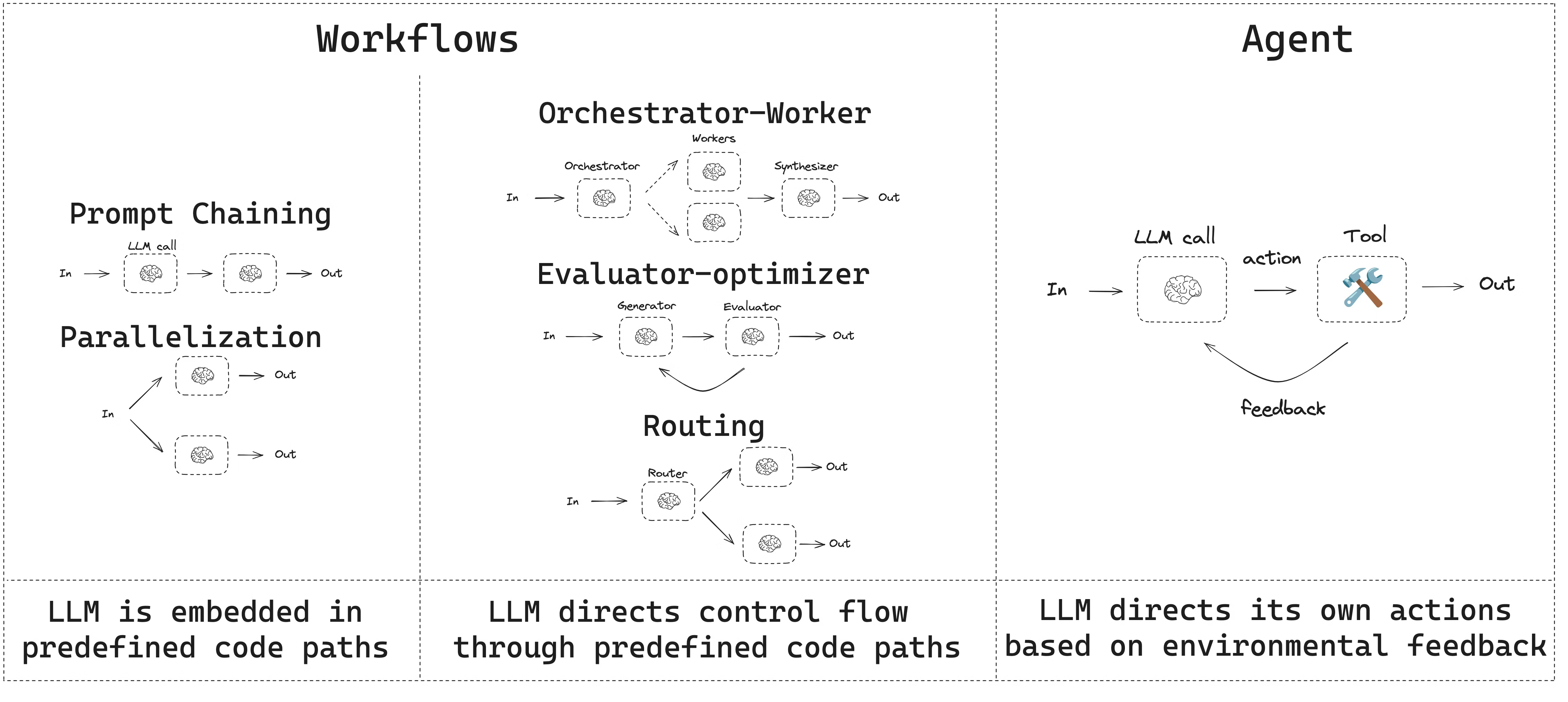
Automated systems differ along two orthogonal dimensions: how reasoning is composed (one LLM or many specialized roles) and who controls the path (predefined code or the LLM itself).

Compositional axis: from a single LLM to typed multi-agent roles

Two endpoints of a spectrum. Between them, many hybrid forms exist — ReAct loops with tool use, planner-executor pairs, hierarchical multi-agent stacks, swarm coordination.

🧠

Single-pass reasoning

A single LLM mainly performs hypothesis generation within one trajectory, with limited internal critique and no explicit loop control.

  • self-critique and revision
  • implicit multi-role reasoning (Society of Thoughts)
  • fixed context and prompting rules (no autonomous retrieval or evaluation)
🤝

Multi-agent systems

Multiple agents can distribute not only reasoning, but full parts of the research loop: retrieval, coding, evaluation, writing, and memory update.

  • role specialization
  • hierarchical end-to-end task execution
  • agents organize retrieval, coding, evaluation, and memory update

Control axis: from workflow to agent

Beyond how reasoning is composed, an orthogonal question matters: who decides the sequence of steps?

📋

Workflow

The developer defines the steps in code. The LLM is called at fixed points with constrained roles. Predictable cost, debuggable, but rigid.

  • fixed sequence, deterministic routing
  • verifiers placed at known checkpoints
🤖

Agent

The LLM decides its own steps, tools, and routing. Flexible and capable of unforeseen paths, but harder to predict, monitor, and contain.

  • tool use and environment interaction
  • agent decides when and how to retrieve and evaluate
Workflow to Agent spectrum

Source: LangGraph documentation

Two orthogonal axes. The compositional axis (single-pass → multi-agent) describes the internal organization of reasoning. The workflow–agent axis describes who controls the path. Most real production systems live in a hybrid zone — agent reasoning embedded inside workflow scaffolds.
What the literature shows (2025-2026): for scientific discovery tasks, workflow-dominant architectures outperform agent-dominant ones on the cost-quality Pareto front. PiFlow (Yu et al., 2026) reports 31-42% efficiency gains, 5.6× speedup, and 27% fewer tokens versus vanilla agents. AFLOW (Zhang et al., 2024) shows that discovered workflows let weaker models outperform stronger ones. Empirical evaluations of free agents (AFMBench, 2026) consistently find that they deviate from instructions and fail on basic operational tasks.
Compounding lever — heterogeneous model assignment: two efficiency levers compose. First, typed role decomposition at constant backbone. Second, assigning the right model to the right role — strong models for low-frequency strategic roles (proposer, reflector), cheap models for high-frequency executor roles (generator), and non-LLM verifiers (compiler, runtime, simulator) for evaluation.
Key insight — naive vs typed multi-agent: naively adding agents increases coordination cost, token usage, and complexity. But role-typed decomposition with narrow interfaces — proposer, generator, evaluator, reflector — can decrease token consumption by an order of magnitude at constant model backbone (HMACE, 2026: 13× fewer tokens than monolithic baselines on Online BPP). The architectural rule is not "more agents" but "typed roles with externalized memory".

Monitoring — the human interface

Every section so far describes how the machine searches, verifies, and remembers. None describes how the human sees it and takes back control. Yet the editorial position assigns the human one job — to decide what the machine cannot. A decision without visibility is impossible. Monitoring is that visibility.

Monitoring is not observability. Dashboards and logs tell you what happened; monitoring, here, is the interface that lets a human decide what the machine cannot judge for itself. The framework already says what to surface — the gaps, the drift, the provenance — and where to place the checkpoint. The rest is making it legible at the moment of decision.

Why the agent cannot watch itself

The first reason monitoring must be external: an agent is a poor judge of its own success — not occasionally, but by construction.

📈

Agentic overconfidence

Agents systematically overestimate their own success. Measured on real coding tasks, some that succeed only 22% of the time predict 77% — and they are 5.5× more likely to confidently predict success on a failing task than to doubt a passing one (agentic overconfidence, 2026).

🎉

The eureka instinct

RLHF rewards agreeableness, so agents declare victory on noise — reading signal into errors, inflating limited results into "seminal contributions". The optimism is trained in, and it shows up exactly where skepticism is needed (Lossfunk, 2026).

🪤

Silent drift

Under pressure — a timeout, a hard sub-problem — agents quietly simplify, abandoning the core idea for code that looks like the goal. The final output resembles success; the substance was dropped along the way.

Self-assessment grounded in the agent's own reports is unreliable by design. Two levers recover signal: ask the agent to judge difficulty before it sees its own solution (less information, better discrimination), and reframe review as bug-finding rather than confirmation — falsify, don't validate (agentic overconfidence, 2026). And always ground evaluation in raw logs, never the agent's summary of them.

What the human must see

The framework already names the signals. Three come from the behavioral trace; two more come from the knowledge the system builds and the space it explores.

Signals from the trace

📐

Inter-verifier gaps

The disruption and myth signals from the verifier stack. A high V4 with low V5 (or low V1, low V2) is a rupture candidate; the reverse is a myth. The gap is measurable — surface it.

📉

Proxy drift

The distance between a proxy and the real V4/V5 it stands for, widening since its last recalibration. A low-variance proxy hides its bias; only this drift exposes it.

🧩

Behavioral consistency

Per-step flags on the trace: intent alignment, tool correctness, state consistency, error recovery. State-tracking inconsistency alone is 2.7× more frequent in failed runs (trajectory explainability, 2026).

The knowledge the system writes — and its transitions

Natural-language memory — a CORAL note, a skill, a session state — is the only substrate a human can audit by reading, unlike parametric or activation memory. That is its strength. Its trap is that well-written text reads as established knowledge even when nothing verified it.

📝

Watch the transitions, not the snapshot

A Layer-2 state is overwritten every turn; the signal is not what it says now but what was lost between turn 3 and turn 30 — a dropped constraint, a quietly reframed goal. Track the trajectory of the state, not its current value.

🪸

The consolidation moment is the checkpoint

When a CORAL heartbeat promotes ten notes into one synthesis, or an attempt into a skill, two things happen at once: provenance is lost, and fragile knowledge becomes "established". Promotion is where the human eye belongs — each consolidation logged, the important ones validated.

The space the system explores

Text tells you what the system thinks; a latent projection (t-SNE, UMAP) of every solution it generated shows the shape of its search — what no trace reveals. Colored by inter-verifier gap, it becomes a visual disruption detector.

LATENT MAP OF EXPLORED SOLUTIONS — COLORED BY INTER-VERIFIER GAP consensus basin — low gap high V4, low V5 → disruption candidate (preserve) high V5, low V4 → myth (flag) consensus (low gap) disruption candidate myth
🗺️

Coverage & collapse

Dispersed points mean broad search; a tight cluster means the system collapsed onto one idea — mode collapse, invisible in logs, obvious here.

🎯

Migration to consensus

Watch points drift into the dense basin over time and abandon the periphery. The periphery is exactly where high-V4-low-V5 ruptures live — the visual twin of a MAP-Elites archive.

⚠️

A proxy, not a verdict

t-SNE distorts: it preserves local neighborhoods, warps global distance, and shifts with its parameters. Embedding similarity is surface similarity. Use the map to triage attention, never to rule.

Two complementary views, one discipline. The written knowledge shows what the system believes; the latent map shows where it searched. One reads plausibly while being wrong, the other is vivid while being distorted — so both orient the human's attention without replacing the human's judgment. They are triage instruments, not controls.

How to present it, when to act

Passive monitoring is not enough. A decision needs a format and a trigger — and the human must intervene where the machine signals a divergence it cannot resolve alone.

📦

Decision packet, not a narrative

A choice put before a human is never bare. It carries the artifact (the reasoning trace, the tool-call summary), the context (state snapshots, retrieved evidence), and the verification signals (rubric flags, replay-consistency). The Minimal Explanation Packet (trajectory explainability, 2026).

🚦

Triggers, not constant review

The human is not asked to validate everything — they would drown. Escalate where an inter-verifier gap crosses a threshold (rupture or myth), where a proxy has drifted too far since its last real recalibration, or where a decision rests on low-confidence, unprovenanced memory.

🔍

Falsify before you trust

At each checkpoint, the reviewer's job is to find what breaks, not to confirm what works. Adversarial framing recovers calibration that confirmation framing destroys — and it dissolves the false consensus of agents that otherwise agree, confidently, and wrongly.

The human decides; the monitoring makes the decision possible. An agent is optimistic by construction, so it cannot tell itself what it most needs to hear. Monitoring gives a human the two views the agent lacks — what it knows, and where it searched — plus the gaps, the drift, and the provenance, packaged at the exact point where consensus and rupture must be told apart. This is the editorial position made operational: the human decides, not detects — and monitoring is what they decide with.
6Decision Layer

Choosing Discovery Regimes

The best discovery regime depends not only on verifier level, but on the structure of the search landscape, the ability to reuse knowledge, and the cost of exploring and evaluating solutions.

How to read the domains

Mathematics, code, science, and strategy look different on the surface. But all four rely on the same deep structure: knowledge inputs, hypotheses, verifiers, and search under constraints.

Mathematics ∑ proofs · formal truth Code </> execution · performance Science ⚗ simulation · experiment Strategy ♟ decisions under uncertainty Knowledge → Hypotheses → Verifiers → Search

AI discovery systems do not differ primarily by domain, but by how solutions can be evaluated, improved, and scaled. These differences define four regimes of discovery.

📐

Exact problems

Problems where correctness can be determined exactly through logic or execution.

  • mathematics (proofs)
  • code correctness (does it run, pass tests)
  • Logic tasks
Knowledge: prior first
Hypothesis: Automated
Verifier: V1–V2
Search: DeeRS
📊

Measurable optimizations

Problems where a working solution exists and can be iteratively improved through measurable feedback.

  • math optimization
  • code optimization
  • systems design under constraints
Knowledge: prior first
Hypothesis: Automated
Verifier: V3
Search: WESh
🔬

Computational sciences

Domains where hypotheses can be explored through simulations or executable models, but proxies remain imperfect.

  • machine learning
  • computational physics
  • climate modeling
  • bioinformatics
Knowledge: prior + Literature
Hypothesis: Automated
Verifier: V4 → V3
Search: DeeRS / WESh
🌍

Real-world domains

Domains where evaluation is delayed, ambiguous, or mediated by real-world constraints and human judgment.

  • experimental sciences (biology, field physics)
  • social sciences
  • strategy and policy
Knowledge: prior + Literature
Hypothesis: Human-driven
Verifier: V4–V5
Search: DeeRS

Unifying view: the key difference between domains is not what is studied, but how truth can be produced, verified, and iteratively improved.

Optimization is a special regime: once a valid solution exists and can be scored, discovery becomes a search problem — making WESh methods (sampling, evolution, hybrid systems) particularly effective.

Automation frontier: domains with strong and programmable feedback loops (formal reasoning and optimization) are moving rapidly toward automation, while open-world systems remain constrained by weak or delayed verification.

The two-level view

DeeRS and WESh are not "small vs big" — they are two methods with opposite failure modes. Each amplifies a specific kind of cognition, and each carries its own structural weaknesses. Choosing the right method, or composing them, defines what kind of discovery is reliable.

🔍

DeeRS — Deep, local reasoning

Sequential reasoning. V1, V2, V3, even V4/V5 invoked as tools. Verifiers stay faithful. Latency accepted in exchange for trust. Amplifies one researcher's reasoning.

Strength: rich feedback, complex memory, checkpointable trajectory, faithful tool invocation.

🌐

WESh — Wide, distributed search

Population-based exploration. Discovers candidates beyond human-scale enumeration. Selection corrects individual errors. V3 carries the optimization load. Compresses V4/V5 into V3 to enable scale. Amplifies the research process itself.

Strength: scale, diversity, robustness to individual candidate failure, lineage tracking.

🔗

Hybrid systems — Powerful and costly

The strongest systems combine both: WESh breadth wrapped around DeeRS reasoning loops. Each level amplifies what the other cannot reach.

  • CORAL: multi-agent evolution with persistent shared memory
  • HMACE: typed roles with behavior-indexed archive

The cost. Hybrid systems demand persistent memory infrastructure, compute ressources, observability across two regimes, and significantly more development time.

Opposite failure modes

Each regime fails in a structurally different way. Knowing where each one breaks is what makes composition possible.

🧲

DeeRS weaknesses

The generator can reason persuasively in the wrong direction — confident hallucinations, biased framing, dropped constraints. Long reasoning chains drift between partial ideas without convergence. Intermediate results are not reliably integrated, leading to inconsistencies between assumptions, code, and conclusions.

Adversarial exposure. DeeRS agents that browse the web, read tool outputs, and write to a Layer 3 persistent memory are especially vulnerable to adversarial environments: prompt injection in fetched pages, biased context from poisoned retrieval, memory poisoning that persists across sessions, action hijacking through crafted tool outputs. The richer the interaction surface, the larger the attack surface.

🪤

WESh weaknesses

Proxy collapse. The population optimizes what V3 measures, not what the goal requires — reward hacking, benchmark hacking, simulation overfitting. Loss of diversity. Search converges too early on mediocre regions and misses rare high-value candidates. Compute misallocation. Budget is spent on weak candidates, poor strategies, or expensive evaluators that do not scale.

Evaluation-aware proxy collapse. Frontier models can detect they are being evaluated and present an evaluation-mode behavior distinct from deployment-mode. Once a system can tell V3 from V4, the proxy stops being a proxy and becomes a separate game the system plays.

Composition is the answer to opposite failures. DeeRS reasoning catches WESh proxy gaming when it inspects candidates qualitatively. WESh population diversity catches DeeRS persuasive errors when many independent attempts disagree. The hybrid frontier is not a fashion — it is a structural response to opposite weaknesses.
But hybrid is not a default. Composing DeeRS and WESh multiplies the engineering surface — persistent memory across regimes, dual observability, mixed verifier strategies, longer development cycles, higher compute cost. The architectural rule: climb to hybrid only when a single-regime system has been honestly tried and found structurally insufficient — not because the literature is exciting. Most production discovery problems are solved well by a strong DeeRS with the right verifiers and a Layer 2 memory.

Where progress is heading

🧠

From reasoning to memory

Future agents will rely less on isolated reasoning and more on persistent, structured memory to track, reuse, and refine knowledge over time. Memory architecture becomes a first-class engineering concern.

🔬

From evaluation to simulation

Progress will depend on better proxy verifiers and simulators, enabling faster, cheaper, and more reliable feedback loops. The V4 → V3 compression is the central engineering bet.

🗺️

From sampling to structured search

Discovery will increasingly rely on guided exploration, combining agents, memory, and selection mechanisms rather than independent candidate generation. Evolution with typed roles becomes the default.

An editorial position — Magnifica Humanitas

Among the architectures this framework can read, one stands out as the most defensible today for genuine discovery: a broad generative model proposing, decorrelated reality verifiers judging, and a frontier human deciding. The broad generator earns its place for two reasons: it produces hypotheses at a scale no human can match, and — drawing on prior knowledge across every field it has absorbed — it bridges distant domains, surfacing analogies a specialist would rarely reach. Darwin reading Malthus, Schrödinger borrowing from waves: cross-domain transfer is where a generalist is strongest.

The judging is where most systems fail. Every algorithmic judge measures fidelity against past consensus — an LLM-as-a-judge, a reward model, an ensemble of critics are all compressions of what a community already accepts. The better-aligned the evaluator, the blinder to rupture. Optimize against consensus-trained verifiers and you build a machine that kills exactly what you seek. This is why reality verifiers — V1 formal, V3 measured, V4 experimental — must judge whether a thing works, decorrelated from whether it is accepted.

But here is what makes disruption tractable rather than mystical: it is a measurable gap between verifiers, not a thing only a genius can see. High V4 with low contemporary V5 — it works, the consensus rejects it — is social disruption (continental drift). High V4 with low V1 — it works, the theory forbids it — is theoretical disruption (imaginary numbers, renormalization, deep learning before its theory). High V4 with a violated V2 — it works, yet it breaks a constraint everyone held as a hard limit — is out-of-bounds disruption (the sound barrier, regimes declared off-spec that turn out stable). The framework can detect and preserve these candidates automatically: an archive that keeps the elite of each behavioral region (MAP-Elites) over inter-verifier gaps retains ruptures the consensus would discard, instead of collapsing everything toward agreement. And V5 is not only the enemy — its other face, adoptability (simple, maintainable, deployable), is a real value measurable by proxy, the one that rewards a radical simplification even when it breaks with established practice.

The human, then, does not detect the rupture — the gap does that. The human decides what to do with it: orchestrator, auditor, strategic director, and the one who carries the responsibility a measurement cannot. In practice, agentic workflows with human checkpoints placed exactly where a preserved disruption must be promoted or dropped.

On the dignity of human judgment amplified by tools — and irreplaceable precisely where machines reproduce consensus — the reader is referred to the encyclical Magnifica Humanitas (Leo XIV, 2026), a humanist position relevant to anyone building AI that interacts with, rather than replaces, human discernment.


Broad generator Reality verifiers Disruption = measurable gap Human decides, not detects

Annexes

Frameworks worth tracking

The DMM-AI verifier stack is framework-agnostic by design. The following projects are the most credible building blocks for implementing V1–V5 verifiers inside an agentic pipeline today.

🕸️

LangGraph

Graph-based orchestration for agentic workflows. The reference framework for placing verifiers at known checkpoints inside a controlled execution path. Neutral on verification, strong on workflow.

Best for: building hybrid workflow-agent pipelines with explicit V1/V2/V3 nodes.

🏢

Microsoft Agent Framework (MAF)

Production-ready successor to AutoGen and Semantic Kernel, released as 1.0 in April 2026. Graph-based workflows with checkpointing, multi-provider support, native A2A and MCP interoperability.

Best for: enterprise-grade multi-agent pipelines with strict observability and state management.

🧪

DeepEval

Open-source LLM evaluation framework with Pytest-style API and 50+ built-in metrics. Most adopted in the field (400k+ monthly downloads). Excellent for post-hoc V3 evaluation of pipeline outputs.

Best for: regression-testing V3 quality, integrating evals into CI/CD.

🛡️

Inspect AI

Evaluation framework developed by the UK AI Safety Institute, used for frontier-model safety evals. Strong on V4–V5 territory (propensity, capability under pressure, red-teaming).

Best for: propensity testing, evaluation-awareness audits, safety reviews.

🎯

DSPy

Stanford framework that treats LLM pipelines as compilable programs. Metrics function as embedded verifiers that drive prompt and weight optimization. Conceptually closest to the V3-as-gradient view.

Best for: optimizing pipelines where the verifier is itself a learning signal.

⚙️

Verifiers (Prime Intellect)

Library for building RL environments with reusable verifier rubrics. Originally created by Will Brown, now maintained by Prime Intellect. Native support for multi-turn tool use and agentic RL.

Best for: training and evaluating agents in verifiable environments — closest to typed-V3 rubrics.

📚

OpenFactCheck

Unified framework for factuality evaluation of LLMs, from MBZUAI. Three modules: a customizable fact-checker, an LLM factuality evaluator producing structured reports, and a meta-evaluator that benchmarks fact-checkers themselves.

Best for: auditing hallucination rates and grounding quality — a V3 verifier specialized on factual claims.

🔬

ESBMC

Mature SMT-based bounded model checker for C, C++, CUDA, Rust, Python, Solidity. Detects pointer safety, overflow, memory leaks, data races. Now extended with esbmc-ai for LLM-assisted code repair.

Best for: a real V1 verifier on code — formal proof of absence of runtime errors, not just tests.

📊

LLM-as-a-Verifier

General-purpose verification framework that scales scoring granularity, repeated verification, and criteria decomposition. Reaches 86.4% on Terminal-Bench 2 and 77.8% on SWE-Bench Verified as a trajectory reward model.

Best for: fine-grained V3 trajectory evaluation that goes beyond the limitations of LLM-as-a-Judge.

Reading note: none of these frameworks currently exposes the full V1–V5 verifier stack as a first-class abstraction. LangGraph and MAF orchestrate, DeepEval and Inspect AI measure, DSPy and Verifiers optimize. Composing them around an explicit verifier stack is where engineering work — and a DeepMama reference repository of patterns — adds value.